Algorithmic Borrowings: How Game Physics Engines Inform Live Betting Calibrations Across Leagues
Ellis Krüger · Jun 6, 2026
Algorithmic Borrowings: How Game Physics Engines Inform Live Betting Calibrations Across Leagues
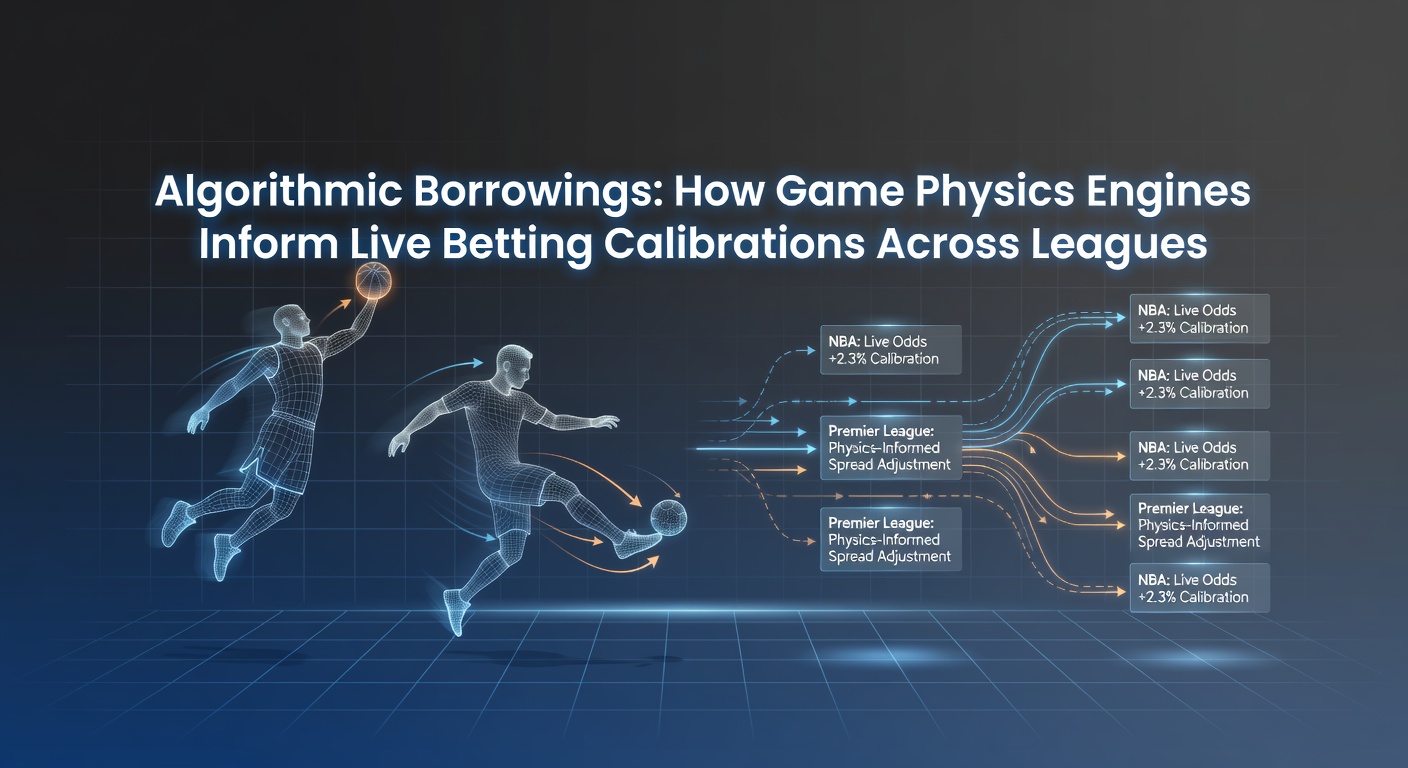
Game developers have long relied on sophisticated physics engines to create realistic simulations of ball trajectories, player collisions, and environmental factors in titles that replicate professional leagues, and these same computational frameworks now supply structured data streams that refine live betting models used by operators worldwide. Researchers in computational sports science have documented how variables such as friction coefficients, momentum transfers, and angular velocities calculated within game engines translate into probabilistic inputs for real-time odds adjustments in actual matches.
Core Mechanics of Physics-Based Simulation Transfer
Engines built on rigid-body dynamics and particle systems generate thousands of micro-outcomes per second when modeling events like a soccer ball spinning through wind resistance or a hockey puck ricocheting off boards at variable angles, and analysts extract aggregated patterns from these runs to calibrate expected-value equations that betting platforms apply during live play. Data pipelines established between simulation clusters and wagering systems allow continuous ingestion of outcome distributions, which in turn update implied probabilities for next-play markets without requiring manual recalibration at each interval.
Those who maintain these pipelines note that the granularity achieved in virtual environments exceeds what traditional statistical sampling from historical match logs can provide alone, particularly for edge cases involving unusual pitch conditions or equipment interactions. By June 2026 several European leagues had begun publishing anonymized sensor data from matches that directly aligned with parameters already tuned inside commercial game engines, accelerating the synchronization process between digital and physical domains.
Cross-League Implementation Patterns
Operators active in football, basketball, and hockey markets have adopted modular calibration layers that ingest physics-derived priors before layering in league-specific variables such as travel schedules, altitude effects, and officiating tendencies. This layered approach permits a single underlying model architecture to service multiple competitions while maintaining distinct variance parameters for each environment, reducing computational overhead during high-volume live betting windows.
Academic teams at institutions including the University of Waterloo have published comparative analyses showing how collision-resolution algorithms originally developed for console simulations improve the accuracy of in-game foul and turnover predictions when applied to basketball and hockey datasets. Their findings indicate measurable reductions in calibration drift during extended live sessions where real-time conditions diverge rapidly from pre-match baselines.
Data Integration and Regulatory Context
Integration occurs through secure APIs that map simulated event frequencies to observable on-field metrics, allowing betting engines to adjust odds spreads within sub-second latencies demanded by modern platforms. Regulatory frameworks in Canada and Australia require operators to demonstrate that any algorithmic inputs, including those sourced from entertainment software, undergo independent validation for fairness and transparency before deployment in licensed markets.
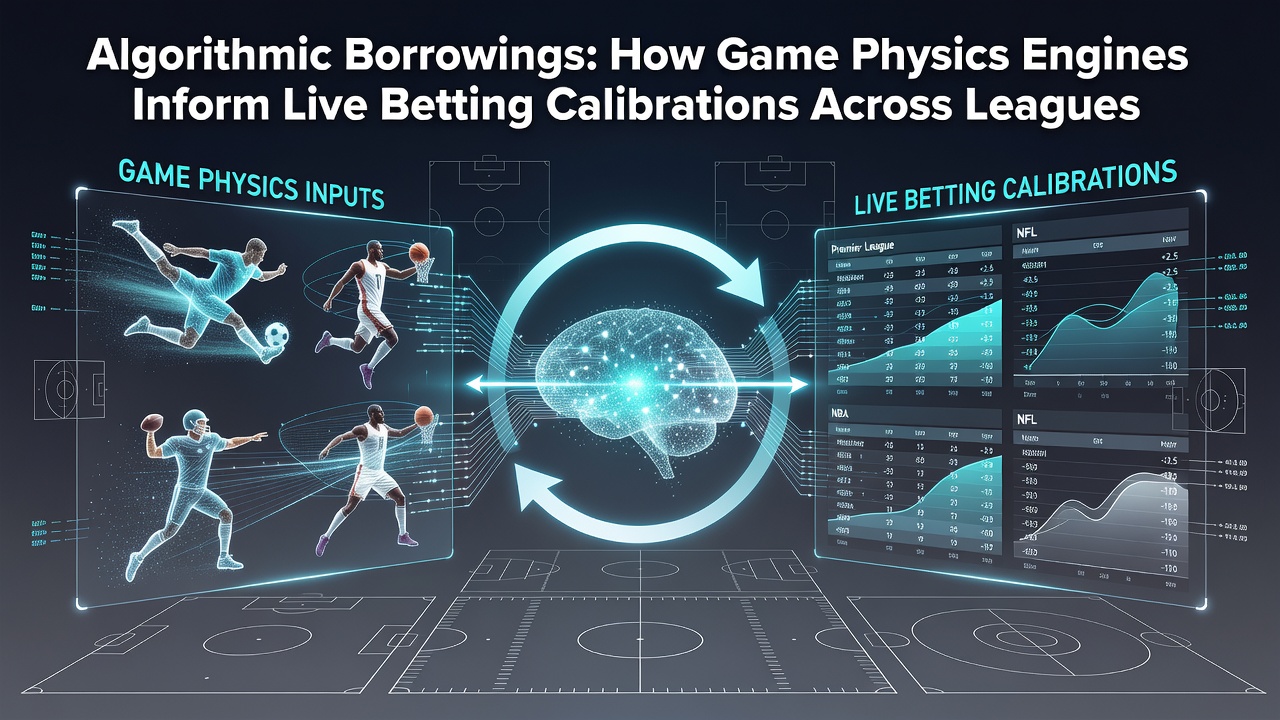
One documented workflow involves running nightly batches of 50,000 simulated match segments drawn from updated engine parameters, then feeding the resulting probability density functions into gradient-boosted models that refine live lines. This method has been observed to tighten confidence intervals around high-frequency markets such as next-goal timing and point-spread movements, particularly in leagues where weather or ice conditions introduce additional stochastic elements.
Future Trajectories in Algorithmic Alignment
Continued refinement of soft-body deformation models and fluid-dynamics approximations within next-generation engines promises even richer datasets for live calibration, especially once real-time player biometric feeds become more widely available. Industry observers expect that by late 2026 several major platforms will incorporate physics-informed neural networks capable of updating parameters mid-match using both simulated priors and incoming sensor streams.
Conclusion
The transfer of algorithmic structures from game physics engines into live betting systems represents a measurable convergence between entertainment simulation and professional wagering infrastructure across football, basketball, and hockey leagues. Documented implementations demonstrate that these borrowings enhance the responsiveness and granularity of odds calibration while operating within established regulatory oversight frameworks in multiple jurisdictions. As simulation fidelity continues to advance, the volume and precision of transferable parameters will likely expand, supporting further alignment between virtual modeling and real-world match dynamics.