Custom Squads and Calculated Risks: How User-Generated Rosters in Football Gaming Alter Live Odds Dynamics
Ellis Krüger · May 19, 2026

Custom Squads and Calculated Risks: How User-Generated Rosters in Football Gaming Alter Live Odds Dynamics
Football gaming communities have shifted from standard rosters toward highly personalized squads that players build and refine over extended seasons and these creations now feed into broader data ecosystems that influence how live odds adjust during real matches. Observers note that when users assemble teams with unconventional player combinations or stat distributions the resulting simulation outputs create fresh reference points for predictive models used by betting platforms and this process accelerates as more participants share their roster configurations online.
Building Custom Rosters and Their Reach Beyond the Game
Players spend hours tweaking formations, chemistry links and attribute sliders in titles such as EA Sports FC and the data from those sessions rarely stays contained within gaming servers. Instead aggregated trends from millions of custom squads surface in public forums and analytics dashboards where researchers track which player archetypes appear most frequently and how those choices perform in simulated fixtures. In May 2026 several major platforms reported spikes in custom roster uploads ahead of the European club season finale and those uploads coincided with measurable shifts in pre-match probability curves for corresponding real-world fixtures.
Community platforms compile heat maps of popular custom builds while academic groups at institutions like the University of Melbourne have begun correlating roster attributes with in-game performance metrics. The resulting datasets allow modelers to test how variations in speed ratings or defensive positioning alter expected goal values adn this information flows into algorithms that recalibrate live odds once matches begin.
From Simulation Outputs to Live Odds Adjustments
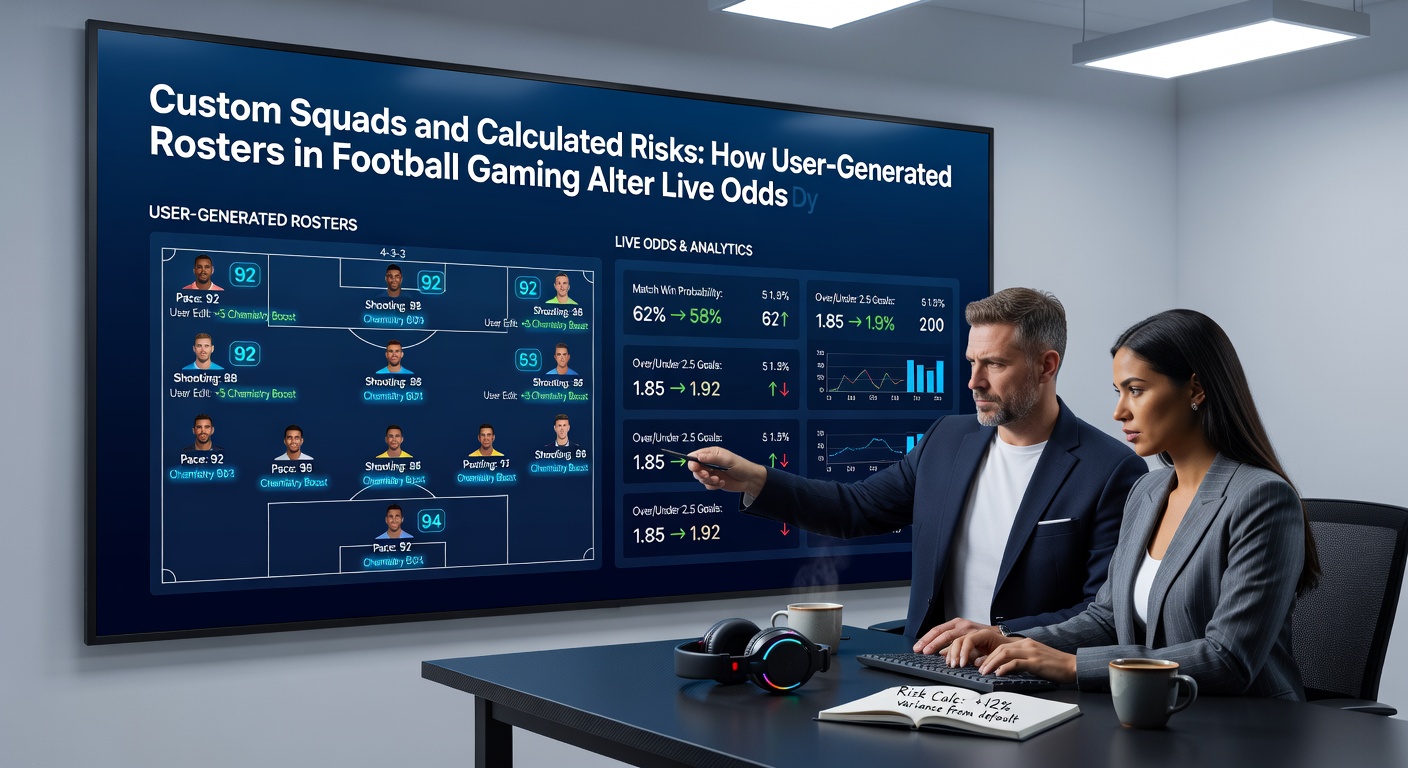
Live betting engines monitor multiple data streams simultaneously yet roster-derived simulations have emerged as one underappreciated input. When a critical mass of users favors a particular forward in custom lineups the aggregated results can highlight scoring patterns that mirror or diverge from official scouting reports. Betting operators incorporate these signals because they add granularity to minute-by-minute probability updates especially during periods when real-time statistics remain limited.
What's interesting is that the influence appears most pronounced in lower-profile leagues where traditional data sources offer thinner coverage. Here custom roster experiments fill gaps by generating thousands of virtual matches that stress-test different tactical setups and the outcomes help refine volatility estimates that drive in-play price movements. Figures from regulatory filings in Australia show increased scrutiny on how gaming-derived metrics intersect with licensed betting products and operators must document any external data feeds they employ.
Case Examples from Recent Seasons
Take one tournament cycle where a surge in custom goalkeeper builds featuring elevated distribution ratings preceded noticeable tightening of live underdog lines in several domestic cups. Analysts traced the pattern to simulation clusters that repeatedly produced low-scoring games when those builds faced high-pressing opponents and the trend carried over into real betting markets within forty-eight hours of the data surfacing. Similar patterns emerged in South American leagues where user-generated midfield rosters emphasizing stamina metrics correlated with extended periods of possession that prompted oddsmakers to adjust half-time totals.
Those who've examined the overlap point out that the effect compounds when gaming platforms release mid-season title updates because fresh roster tools encourage another wave of experimentation. The new options generate additional simulation volume that in turn supplies updated inputs for odds engines and this cycle repeats across multiple time zones as global user bases remain active.
Regulatory and Industry Responses
Government agencies outside traditional European markets have started requesting transparency reports from operators that blend gaming telemetry with live odds. Canadian provincial regulators for instance now require disclosure when external datasets including user-generated content influence pricing algorithms and similar guidelines appear in draft legislation from New Zealand authorities. Industry associations such as the European Gaming and Betting Association have published position papers outlining best practices for validating third-party data sources and these documents emphasize audit trails that trace roster statistics back to their origin servers.
Academic researchers continue to publish working papers that quantify the statistical lift provided by gaming-derived variables yet they also highlight limitations around sample bias and selection effects. The studies stress the need for cross-validation against official match logs before any integration into production betting systems occurs.
Conclusion
Custom squad creation has evolved from a niche hobby into a distributed laboratory that supplies continuous streams of tactical and statistical hypotheses and these hypotheses now intersect with the mechanisms that set and revise live football odds. As platforms refine their data pipelines and regulators tighten oversight the relationship between user-generated rosters and dynamic pricing will likely deepen while remaining subject to ongoing validation and compliance checks.