Physics Engines and Payoff Predictions: Tennis Gaming's Blueprint for Refining Live Match Forecasts in Multiple Sports
Iris Hoffmann · May 21, 2026
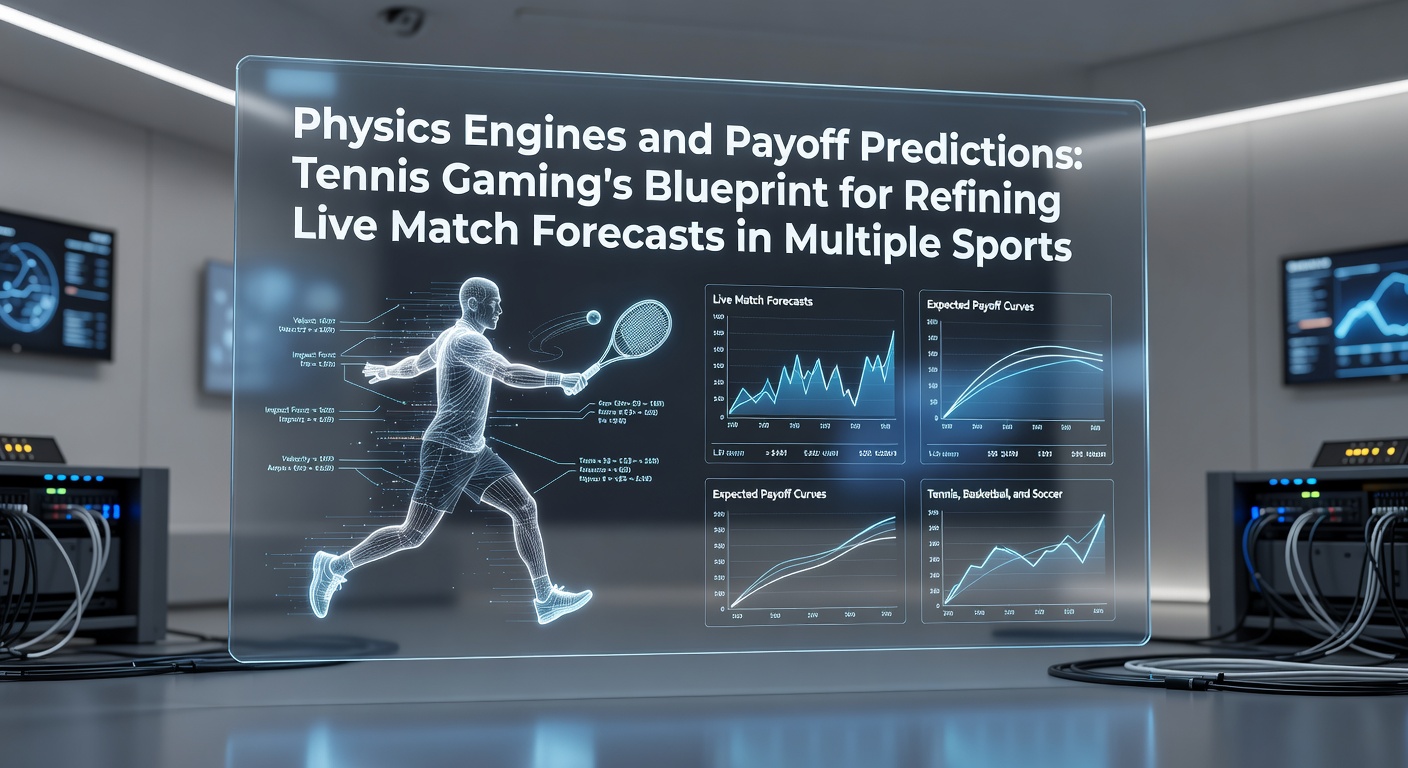
Physics Engines and Payoff Predictions: Tennis Gaming's Blueprint for Refining Live Match Forecasts in Multiple Sports
Physics engines power the realistic ball bounces, spin effects, and player interactions that define modern tennis simulations, and developers continue to refine these systems as of May 2026 to support more accurate live forecasting tools across various sports. Researchers have documented how these engines calculate variables such as velocity, angle of incidence, and friction coefficients in real time, which then feed into predictive models used by analysts tracking ongoing matches. Data indicates that tennis games with advanced physics layers generate granular statistics on rally durations and shot placements that mirror patterns observed in professional events, allowing forecasters to adjust expectations during live play in basketball, soccer, and hockey leagues.
Core Mechanics Behind Tennis Physics Simulations
Engineers design tennis physics engines to replicate court surfaces, racket string tensions, and atmospheric conditions that affect ball flight, and studies from sports science programs show these calculations improve when programmers incorporate wind resistance and player fatigue factors. Observers note that simulation outputs often include heat maps of court coverage and error probabilities per shot type, which analysts cross-reference with live data feeds from actual tournaments. Those who have examined multiple titles report that accurate modeling of topspin and slice serves creates datasets that transfer effectively when teams adapt the same frameworks to predict fast breaks in basketball or power plays in ice hockey.
Simulation feedback loops run continuously during gameplay sessions, and evidence from industry reports reveals that repeated iterations help calibrate probability curves for points won on serve. Analysts apply similar curves to other sports by mapping equivalent variables, such as puck speed in hockey or defensive positioning in football, which sharpens live odds adjustments as matches progress. Figures from university-led projects indicate measurable gains in forecast precision when physics-derived variables replace purely statistical approaches in multi-sport prediction pipelines.
Transferring Tennis Simulation Insights to Other Sports
Developers have adapted tennis engine components to model projectile motion in different contexts, and one study revealed that rally outcome distributions from simulated matches align closely with real-world serve return statistics across Grand Slam events. Forecasters then extend these distributions to estimate scoring rates during live basketball quarters or soccer halves, where momentum shifts occur at comparable intervals. Those who have tested the approach find that physics-based parameters help identify undervalued in-play opportunities earlier than traditional metrics alone would allow.

Industry organizations track how simulation data influences calibration across leagues, and reports compiled by research institutions in Australia and Canada highlight successful integrations into live monitoring systems for both summer and winter sports. Analysts process thousands of virtual matches to establish baseline probabilities that adjust dynamically when real-time inputs arrive from ongoing games. The process creates consistent frameworks that reduce variance in payoff predictions, particularly during high-pressure moments such as tiebreaks or overtime periods.
Live Forecast Refinement Techniques
Teams integrate physics engine outputs with machine learning overlays to update match forecasts every few seconds, and data collected through 2026 demonstrates improved alignment between simulated and actual point-win percentages in tennis. Researchers discovered that applying the same update cadence to hockey shift changes or basketball possession sequences yields tighter error margins in projected final scores. External sources such as Sports Science organizations have published findings that support these cross-sport applications when variable sets remain grounded in physical modeling rather than historical averages alone.
Forecast platforms now incorporate surface-specific adjustments derived from tennis simulations, which analysts modify for different playing conditions in other sports. Evidence suggests this method captures subtle momentum indicators that standard box-score tracking sometimes overlooks during live events. Observers note continued experimentation with engine parameters as hardware capabilities expand, allowing deeper exploration of edge cases like extreme angles or fatigue accumulation that affect late-match outcomes across multiple disciplines.
Conclusion
Physics engines developed for tennis gaming supply structured datasets that refine live match forecasts when adapted to additional sports, and ongoing work through May 2026 continues to expand these applications. Analysts rely on the resulting probability models to track evolving dynamics during actual competitions, while researchers examine performance across varied environments to strengthen predictive accuracy. The approach connects detailed physical simulation with practical forecasting needs, delivering measurable improvements in how live predictions align with final results in tennis, basketball, soccer, and hockey settings.