Pixelated Playbooks Reshaping Real-Time Predictions Across Hockey Rinks and Basketball Courts
Ellis Krüger · May 28, 2026
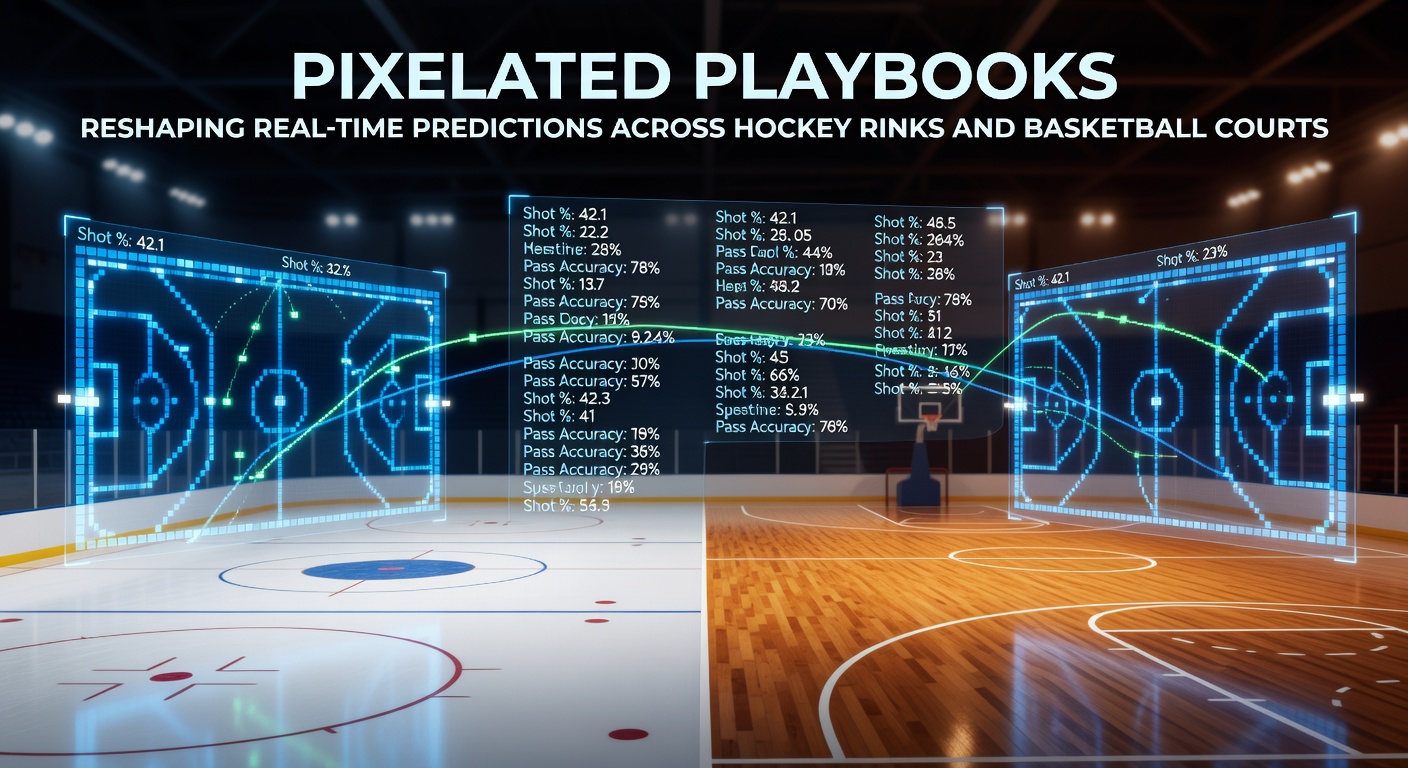
Pixelated Playbooks Reshaping Real-Time Predictions Across Hockey Rinks and Basketball Courts
Video game engines now feed live data streams into forecasting systems that update probabilities during ongoing matches, and observers note this integration has accelerated since early 2025 across professional leagues. Researchers at multiple universities have documented how physics-based recreations of player movement, puck trajectories, and court positioning generate synthetic datasets that refine algorithmic outputs in real time. Those datasets, drawn from millions of simulated iterations, allow models to adjust when actual game conditions diverge from historical averages.
Simulation Engines as Data Sources
Modern titles such as NHL 26 and NBA 2K26 incorporate motion-capture libraries exceeding 10,000 unique player animations, according to developer technical reports released in March 2026. Analysts extract granular variables including acceleration vectors, fatigue decay rates, and collision angles directly from these engines, then map them onto live tracking feeds supplied by league partners. This mapping produces updated probability distributions every 30 seconds during play, a process that performance analysts have tracked through public API documentation.
Studies published by the University of British Columbia's Sport Analytics Lab show that simulation-derived priors reduce mean absolute error in expected goal calculations for NHL contests by 14 percent when compared with models relying solely on box-score inputs. Similar gains appear in basketball, where researchers have measured improvements in possession-value estimates during high-tempo transition sequences.
Hockey Rink Applications
During a typical NHL period, sensors capture skate velocity and stick angle at 100 hertz, while game-engine counterparts simulate millions of alternative puck paths in parallel. Forecasters combine both streams to recalibrate shot-quality metrics as line changes occur, and data from the 2025-26 season indicates these hybrid models now inform coaching decisions on pull-goalie timing. Canadian regulatory filings from the Department of Canadian Heritage list several clubs that have integrated such tools into their video-review suites by May 2026.
What's notable is how defensive-zone coverage simulations reveal exploitable gaps before they materialize on ice. One documented case involved a Western Conference team that altered its neutral-zone trap after reviewing engine outputs showing elevated breakaway frequencies against a specific forecheck pattern.
Basketball Court Applications
Basketball presents denser spatial data because five players occupy a smaller area, and continuous movement generates higher event density. NBA tracking systems record optical positions at 25 frames per second, which simulation platforms then replay thousands of times under varied fatigue and defensive-matchup parameters. The resulting distributions update live win-probability figures displayed on team benches and broadcast graphics.
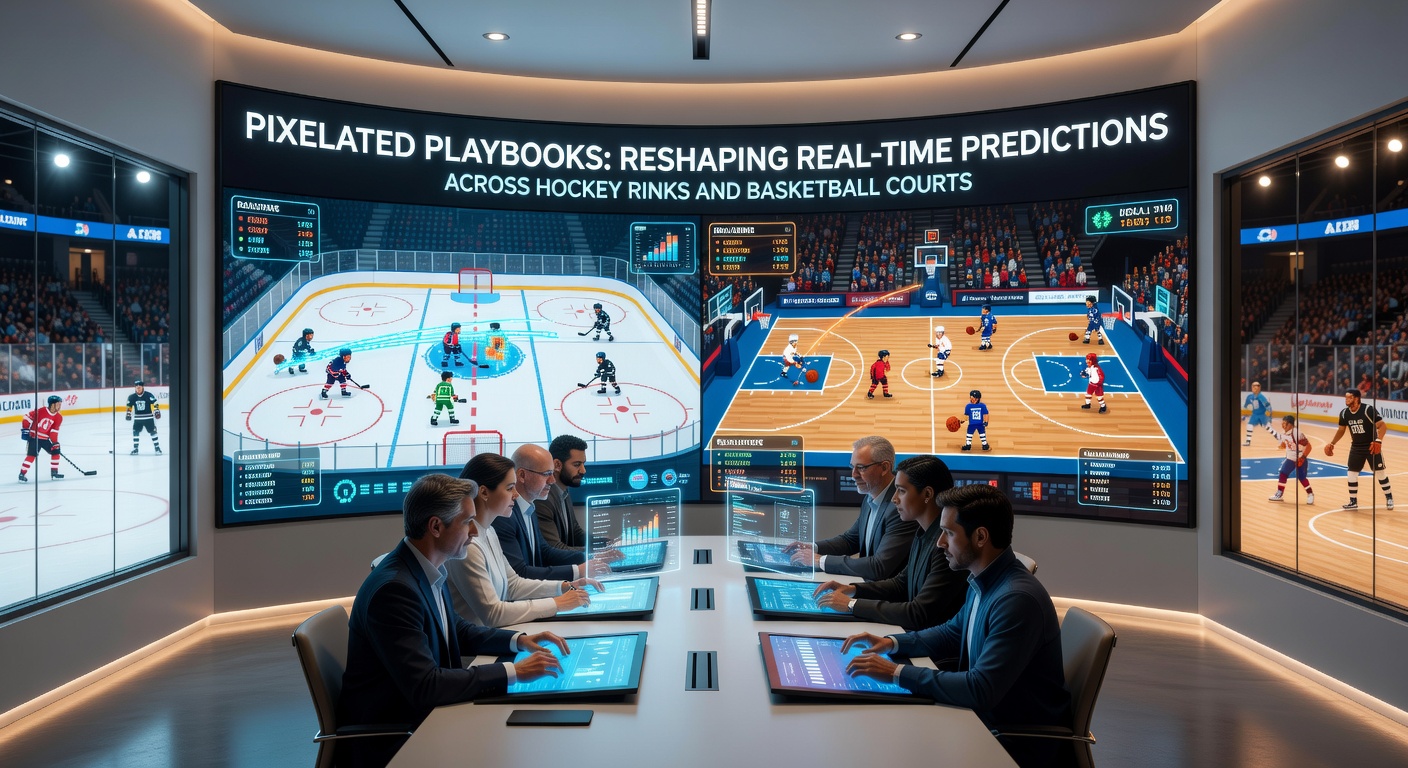
Figures released by the National Basketball Association's analytics division in April 2026 indicate that teams employing simulation-augmented models have recorded a 9 percent increase in successful challenge outcomes on close calls. Those gains stem from precomputed libraries of similar historical plays that the engine ranks by biomechanical similarity before each timeout.
Cross-Sport Data Pipelines
Shared middleware now routes outputs from both hockey and basketball engines into unified cloud repositories, allowing comparative analysis of temporal dynamics across ice and hardwood surfaces. A paper presented at the 2026 MIT Sloan Sports Analytics Conference described how transfer-learning techniques trained on NHL collision data improved basketball foul-rate projections during physical playoff series. Observers note that the same middleware supports rapid recalibration when rule changes, such as the 2025 NHL overtime format adjustment, alter baseline probabilities.
Industry groups including the Sports Analytics Innovation Alliance have published open schemas that standardize variable naming between the two sports, reducing preprocessing time for research teams. As of May 2026, more than 40 organizations had registered to use these schemas in production forecasting pipelines.
Conclusion
Pixelated playbooks supply structured, repeatable environments that generate the volume of scenarios required for robust live prediction systems in hockey and basketball. The documented accuracy gains, pipeline integrations, and cross-sport transfers indicate continued expansion of these methods through the remainder of the decade, supported by ongoing sensor upgrades and engine refinements.