Simulation-Driven Injury Protocols: Bridging Multi-Sport Gaming Data with Live Player Availability Bets
Iris Hoffmann · Jun 27, 2026
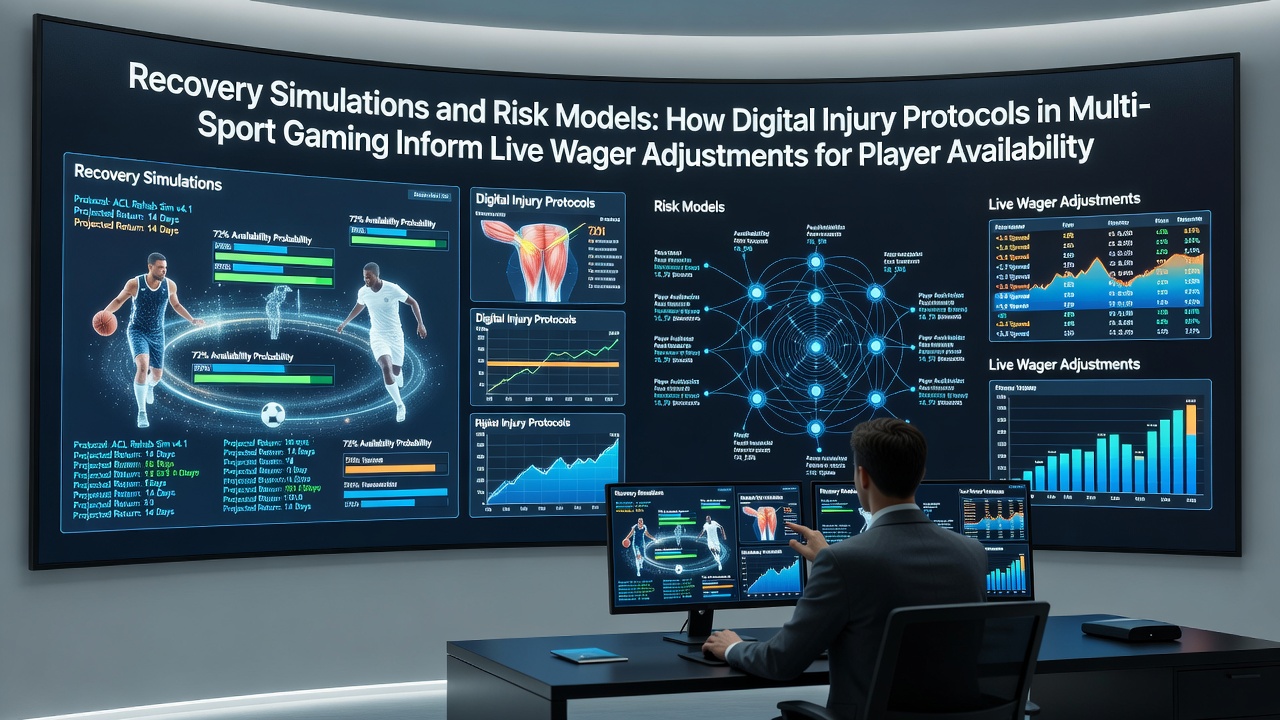
Simulation-Driven Injury Protocols: Bridging Multi-Sport Gaming Data with Live Player Availability Bets
Recovery simulations embedded in multi-sport gaming platforms generate detailed datasets on player injury timelines and rehabilitation pathways, and these outputs feed directly into risk models that betting operators apply when recalibrating live wagers on athlete availability. Game engines track variables such as tissue stress, rest intervals, and positional workload during virtual matches, which produces probability curves that mirror patterns observed in professional leagues. Operators integrate these curves into algorithmic systems that adjust odds in real time as match situations evolve.
Core Mechanics of Digital Injury Modeling
Multi-sport titles incorporate physics-based engines that calculate soft-tissue damage accumulation, bone stress thresholds, and recovery velocity under different training loads, while developers calibrate these calculations against anonymized medical data released by league partnerships. When a simulated athlete sustains an impact or reaches fatigue markers, the system assigns a recovery window measured in simulated days and factors in modifiers for age, prior injury history, and sport-specific movement demands. Observers note that these protocols expanded in scope during the 2025-2026 development cycle, with June 2026 patches introducing granular ligament elasticity variables that refined return-to-play forecasts across basketball, football, and hockey simulations.
Data streams from these models reach third-party analytics firms through licensed APIs, and risk teams then map the resulting distributions onto actual league injury reports released weekly by organizations such as the Canadian Athletic Injury Surveillance Program. The mapping process aligns virtual recovery curves with empirical absence rates, which creates weighted confidence intervals that operators apply to live markets on player participation.
Risk Model Calibration Across Sports
Calibration routines combine simulation outputs with live telemetry from wearable devices used in professional training sessions, and the merged datasets allow models to update probability estimates every few minutes during matches. For example, a quarterback showing elevated shoulder stress in a console league simulation receives an adjusted availability probability that operators cross-reference against real-time snap counts and medical staff reports. This cross-referencing produces dynamic odds shifts on prop markets that bettors place while games remain in progress.
Research institutions including the University of Queensland Centre for Sports Science have published comparative analyses showing how simulation-derived recovery distributions align with observed absence durations in rugby and Australian rules football. These studies supply external benchmarks that operators incorporate when tuning thresholds for over-under markets on games missed by key players.
Transmission to Live Wager Systems
Betting platforms ingest simulation outputs through secure data feeds that update risk engines alongside traditional sources such as team press conferences and league injury designations. When a high-usage forward logs elevated knee-load metrics in concurrent gaming sessions, the system flags a potential availability downgrade and recalibrates live lines accordingly. The adjustment occurs without human intervention in most cases, although compliance teams review flagged anomalies to maintain regulatory alignment.
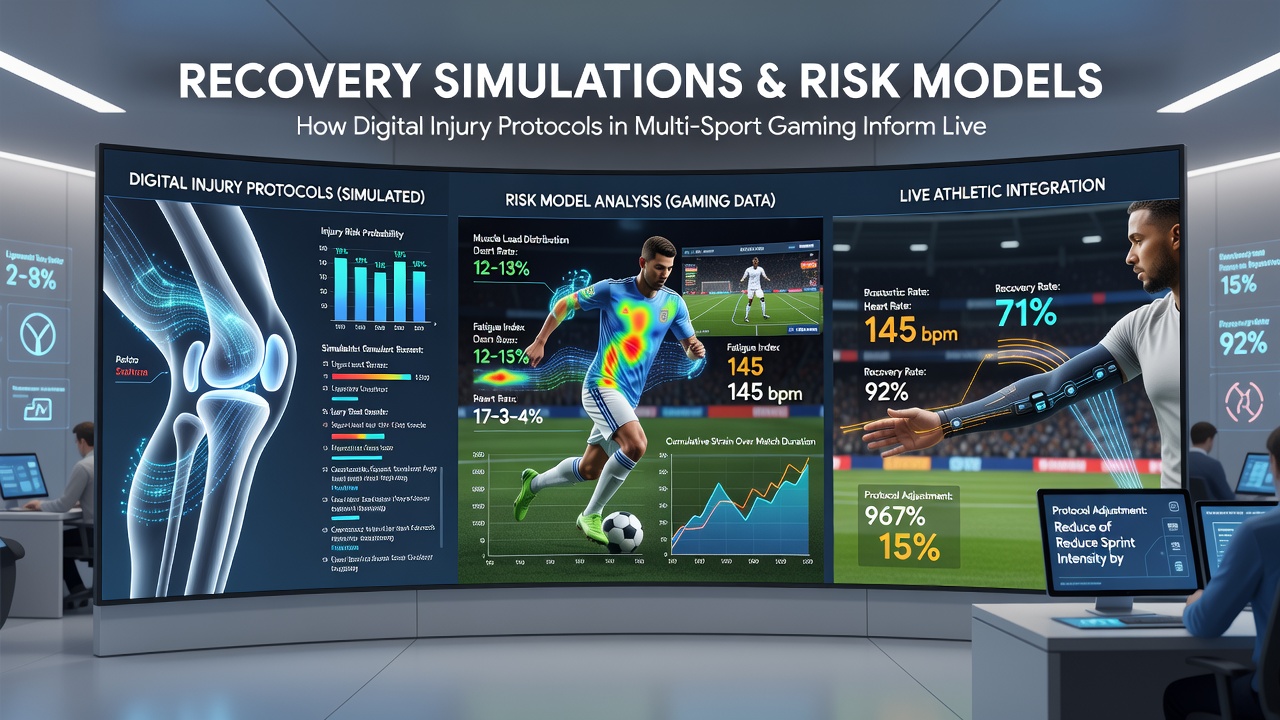
European operators licensed under the Malta Gaming Authority have documented the integration of these feeds into multi-sport offerings, and the documented latency between simulation update and odds revision averages under eight seconds. This speed enables markets on next-possession participation or quarter-specific availability to reflect the latest modeled risk assessments.
League-Specific Applications and Data Flows
National Hockey League injury reports receive supplementary context from hockey-centric simulation runs that track shift-length fatigue and board-impact forces, while NBA operations benefit from basketball engines that model load management protocols across back-to-back schedules. Football simulations contribute positional workload data that informs offensive-line availability estimates during extended drives. Each league maintains data-sharing agreements with simulation publishers that specify anonymization standards and update frequencies, which ensures consistent input quality for the downstream risk models.
Analysts at the U.S. National Institutes of Health have examined correlations between simulated recovery timelines and actual return-to-play statistics published by major professional organizations, and their findings support continued refinement of weighting coefficients used in live wager engines. The resulting adjustments appear in markets offered by operators across North America and Australia, where regulatory frameworks require transparent documentation of data sources influencing odds movements.
Conclusion
Digital injury protocols developed inside multi-sport gaming environments supply structured recovery data that risk models translate into live wager adjustments on player availability, and operators continue to refine these pipelines through partnerships with academic researchers and league medical staffs. The flow of information remains governed by licensing terms, data-privacy rules, and real-time validation checks that maintain alignment between virtual outputs and on-field observations. As simulation engines receive further updates, the precision of availability forecasts incorporated into betting systems is expected to increase accordingly.