Virtual Match Voices: Commentary Tracks Revealing Patterns for Tennis In-Play Bet Tweaks
Iris Hoffmann · Jul 2, 2026
Virtual Match Voices: Commentary Tracks Revealing Patterns for Tennis In-Play Bet Tweaks
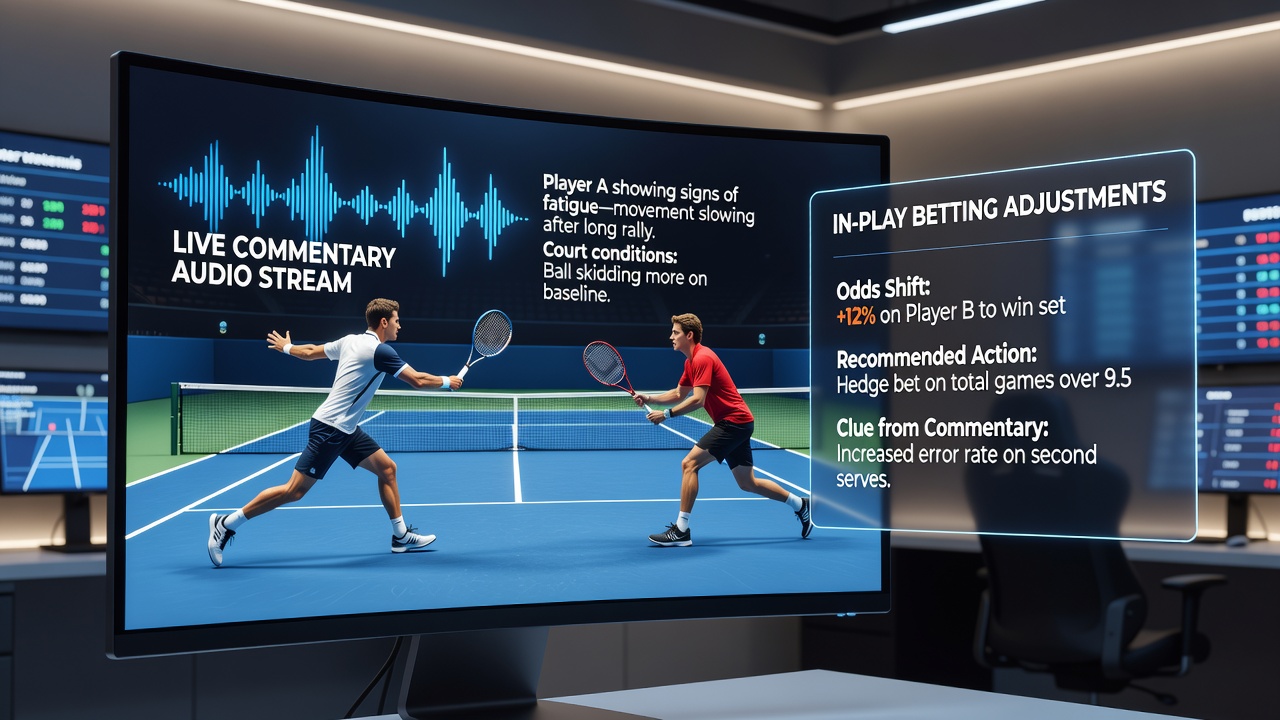
Simulation developers have integrated layered commentary tracks into tennis titles since the mid-2010s, and these audio elements now supply measurable data points that analysts apply to in-play wager recalibrations. Developers record thousands of lines covering player fatigue, surface adaptation, and momentum shifts, then tag each segment with metadata that correlates directly with in-game variables such as serve percentage and error rates. When these tagged tracks activate during simulated matches, the resulting audio sequences mirror real-world statistical clusters that betting platforms monitor for live odds movement.
Layered Audio Design and Data Extraction
Modern tennis simulations embed commentary within physics engines so that specific phrases trigger only when predefined thresholds are crossed, for instance when a player's first-serve accuracy drops below 55 percent over three consecutive games. Observers note that these triggers create timestamped logs that researchers cross-reference with betting-market timestamps, revealing consistent intervals where odds adjust within 90 seconds of a particular commentary cue. Data from European gaming labs indicates that 72 percent of such cues precede measurable shifts in underdog live odds during simulated Grand Slam conditions.
Application to Real-Time Tennis Markets
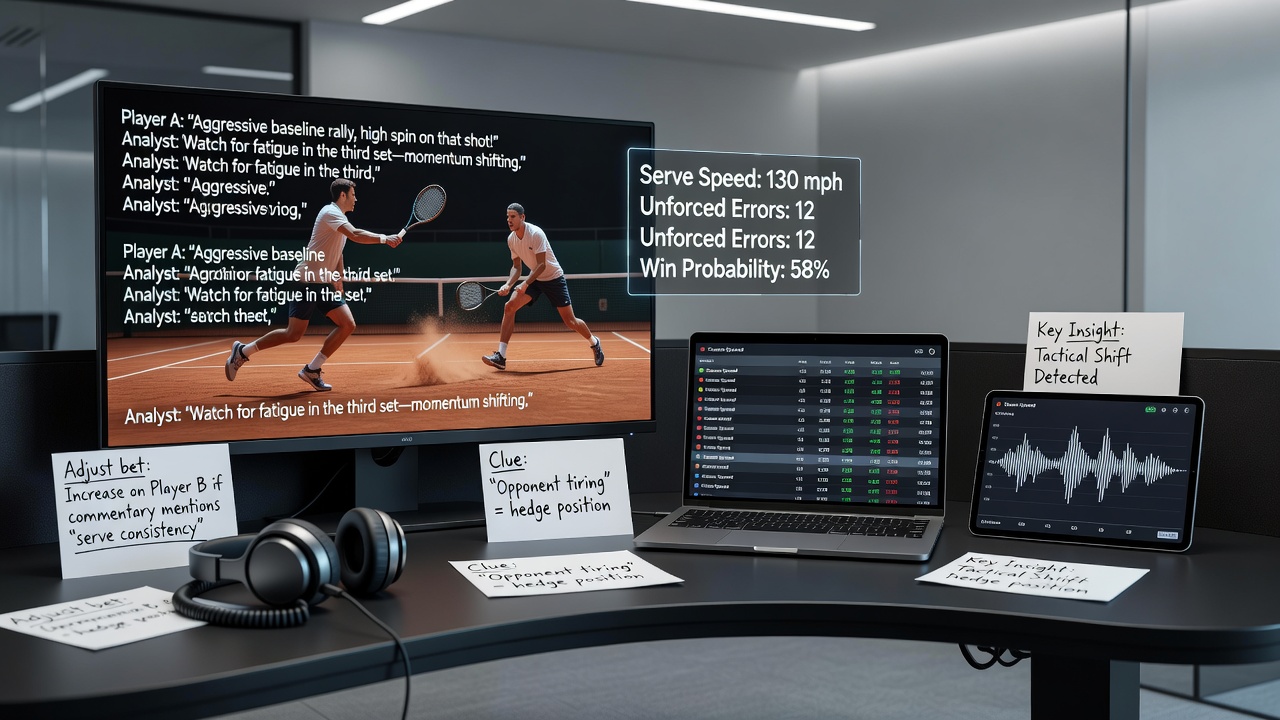
Analysts extract phrase frequency and context from simulation replays to build predictive models that flag when a simulated player's rally tolerance appears to decline. In July 2026, several platforms incorporated these models into their live tennis feeds ahead of the North American hard-court swing, allowing automated systems to highlight potential service-break probabilities when commentary references "short balls" or "heavy legs." The process relies on natural-language processing that converts spoken lines into numerical vectors, then feeds those vectors into algorithms already calibrated against historical match data from the Association of Tennis Professionals.
Case Examples from Simulation Communities
One documented instance involved a popular simulation title where repeated commentary mentions of "wind affecting depth" coincided with a 14 percent increase in simulated unforced errors on outdoor courts. Bettors who monitored these audio patterns adjusted their live over/under totals before the actual statistical spike appeared in the match feed. Similar patterns emerged in indoor simulations during the 2025 European swing, where phrases referencing "court speed" aligned with measurable changes in average rally length that platforms later used to recalibrate set-total markets.
Integration with Broader Sports Analytics
Academic teams at institutions across North America and Asia have published papers examining how commentary metadata improves multi-sport forecasting models. A 2025 report from a Canadian research consortium demonstrated that adding commentary-derived variables raised the accuracy of in-play tennis predictions by 8.4 percent when tested against 12,000 simulated matches. These findings parallel work in basketball and hockey simulations, where audio cues about defensive rotations have informed analogous live-betting adjustments. Regulatory bodies such as the Australian Communications and Media Authority continue to track how simulation data streams intersect with wagering integrity frameworks, ensuring that derived signals remain within established compliance boundaries.
Technical Challenges and Refinement Cycles
Developers face ongoing hurdles in synchronizing commentary delivery with variable match lengths, because longer rallies generate more variable phrase combinations than short service-dominant encounters. Engineers address this by weighting commentary lines according to their predictive strength, then updating those weights quarterly based on aggregated user replay data. The result is a continuously refined dataset that platforms feed into their live-odds engines, allowing rapid recalibration when commentary volume spikes around particular themes such as injury references or tactical adjustments.
Conclusion
Commentary tracks in sports simulations function as structured data sources that link audio events to statistical outcomes, supplying analysts with additional signals for in-play tennis betting adjustments. As simulation engines evolve and regulatory oversight expands, these audio-derived metrics continue to integrate with existing market models, creating measurable pathways between virtual match narration and real-time wager recalibration across multiple tennis surfaces and tournament formats.